

ISO 9000
Overview
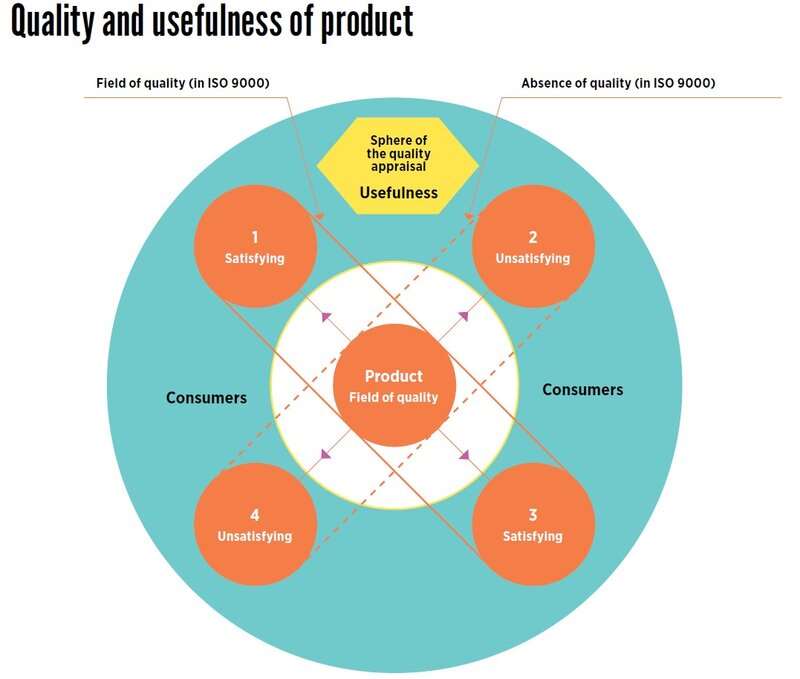
The ISO 9000 standards series is a set of international standards on quality management and quality assurance developed to help organizations document and implement the quality system needed to maintain an effective quality management system (QMS). They are not specific to any one industry and can be applied to organizations of any size.

History
The ISO 9000 series contains four standards:
- ISO 9000:2026—Quality management systems—fundamentals and vocabulary.
- This standard specifies the terms and definitions that apply to all quality management and quality management system (QMS) standards developed by ISO Technical Committee (TC) 176.
- ISO 9001:2026—Quality management systems—requirements.
- This is an international management system standard (MSS) that specifies requirements for a QMS.
- This is the only standard in the series to which organizations can certify.
- ISO/TS 9002:201—Quality management systems—guidelines for the application of ISO 9001:2015.
- This Technical Specification (TS) is intended to be informative and provides guidance on ISO 9001 requirements. It is formatted with a clause-by-clause correlation to clauses in ISO 9001.
- This TS does not add new requirements to ISO 9001; however, it offers examples of how an organization may apply the requirements.
- ISO 9004:2018—Quality management—quality of an organization—guidance to achieve sustained success.
- This standards provides guidelines for enhancing an organization’s ability to achieve sustained success.
ASQ administers the U.S. Technical Advisory Groups and subcommittees responsible for developing the ISO 9000 standards series. In its standards development work, ASQ is accredited by ANSI.
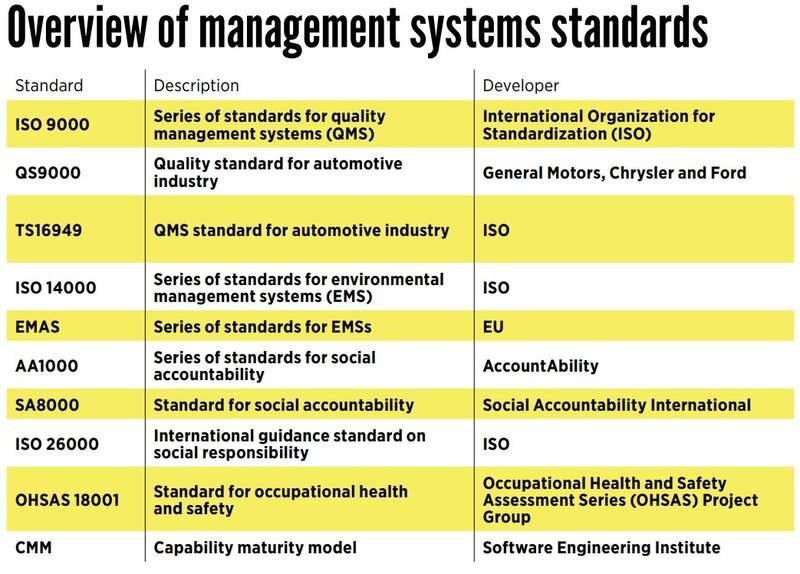
The popularity of the ISO 9000 series has paved the way for other MSSs, including:
- ISO 14001—Environmental management systems—requirements with guidance for use.
- ISO/IEC 27001—Information technology—security techniques—information security management for inter-sector and inter-organizational communications.
- ISO 29001—Petroleum, petrochemical and natural gas industries—sector-specific quality management systems—requirements for product and service supply organizations.
- ISO 45001—Occupational health and safety management systems—requirements with guidance for use.
- ISO 50001—Energy management systems—requirements with guidance for use.
ISO 9000
ISO 9000 is the normative reference for ISO 9001 and many other ISO MSSs. “Normative” means it is indispensable for applying the particular standard in which it is cited. It can help an organization satisfy its customers, meet regulatory requirements, and achieve continual improvement. It should be a first step or the base level of a quality system.
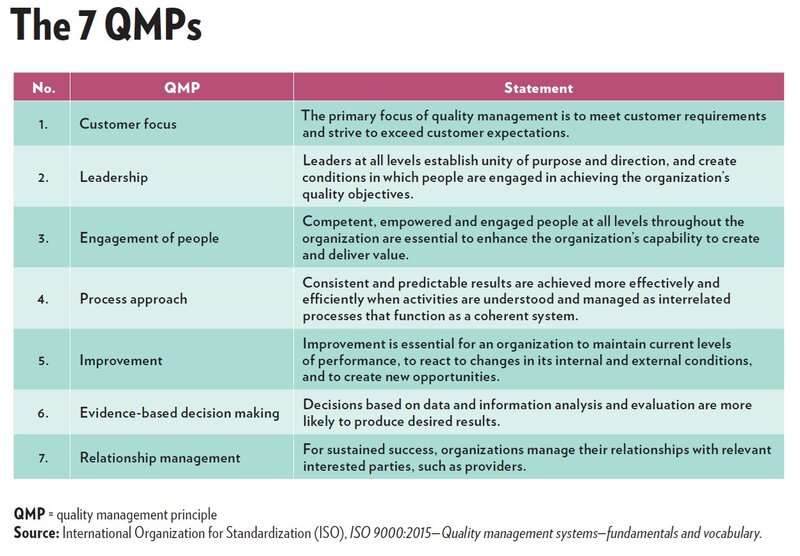
The standard contains terms, fundamentals and seven quality management principles (QMP).
Terms
There are almost 200 terms in the latest revision of ISO 9000. For consistency and effectiveness, the terms must be applied uniformly and as defined.
Fundamentals
The fundamentals describe the culture in which behavior, attitudes, and processes are inculcated into the organization’s fiber to fulfill customer expectations. They include considering factors that affect the organization and relevant interested parties.
QMPs
Originally, the QMPs were developed based on various criteria such as the Baldrige award, the Deming Prize, and the European Foundation for Quality Management Excellence Award. They also reflect the legacy of the great luminaries of quality: Joseph M. Juran, W. Edwards Deming, Walter Shewhart, and Kaoru Ishikawa.
The seven QMPs are:
- Customer focus.
- Understand the needs of existing and future customers.
- Align organizational objectives with customer needs and expectations.
- Meet customer requirements.
- Measure customer satisfaction.
- Manage customer relationships.
- Aim to exceed customer expectations.
- Leadership.
- Establish a vision and direction for the organization.
- Set challenging goals.
- Model organizational values.
- Establish trust.
- Equip and empower employees.
- Recognize employee contributions.
- Engagement of people.
- Ensure people’s abilities are used and valued.
- Hold people accountable.
- Enable participation in continual improvement.
- Evaluate individual performance.
- Enable learning and knowledge sharing.
- Enable open discussion of problems and constraints.
- Process approach.
- Manage activities as processes.
- Measure the capability of activities.
- Identify links between activities.
- Prioritize improvement opportunities.
- Deploy resources effectively.
- Improvement.
- Improve organizational performance and capabilities.
- Align improvement activities.
- Empower people to make improvements.
- Measure improvement consistently.
- Celebrate improvements.
- Evidence-based decision making.
- Ensure accurate and reliable data are accessible.
- Use appropriate methods to analyze data.
- Make analysis-based decisions.
- Balance data analysis with practical experience.
- Relationship management.
- Identify and select suppliers to manage costs, optimize resources, and create value.
- Establish relationships considering the short and long term.
- Share expertise, resources, information, and plans with partners.
- Collaborate on improvement and development activities.
- Recognize supplier successes.
Revisions
ISO 9000 was first published in 1987 by the International Organization for Standardization (ISO), a specialized international agency for standardization composed of the national standards bodies of more than 160 countries.
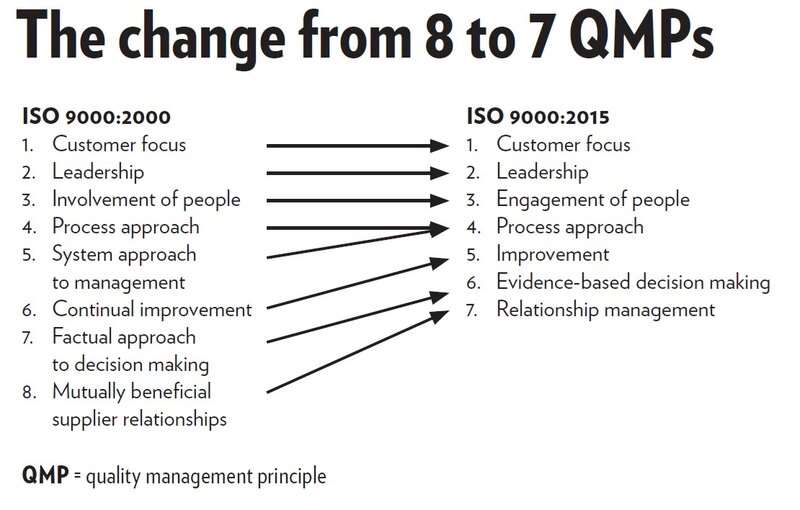
The standard has gone through two major revisions in 2000 and 2015.
ISO 9000:2000
The 2000 revision of ISO 9000 included the addition of eight QMPs.
- Customer focus.
- Leadership.
- Involvement of people.
- Process approach.
- System approach to management.
- Continual improvement.
- Factual approach to decision making.
- Mutually beneficial supplier relationships.
ISO 9000:2015
A technical group was established to review and revise the QMPs for the 2015 update to ISO 9000. The group reduced the eight QMPs to seven.
- Customer focus.
- Leadership.
- Engagement of people.
- Process approach.
- Improvement.
- Evidence-based decision making.
- Relationship management.
“Involvement of people” was changed to “Engagement of people,” giving more strength to this principle.
“Factual approach to decision making” was changed to “Evidence-based decision making” to clarify the meaning.
“Continual improvement” was changed to “Improvement” because many users understood “continual” to mean only small incremental improvements, but it also should include breakthrough changes.
“Mutually beneficial supplier relationship” was changed to “Relationship management” to clarify that relationships with all relevant interested parties should be managed.
Beyond the changes to the quantity and titles of the QMPs, the text explaining each principle was enhanced to include a statement, a rationale, key benefits, and possible actions.
ISO 19011
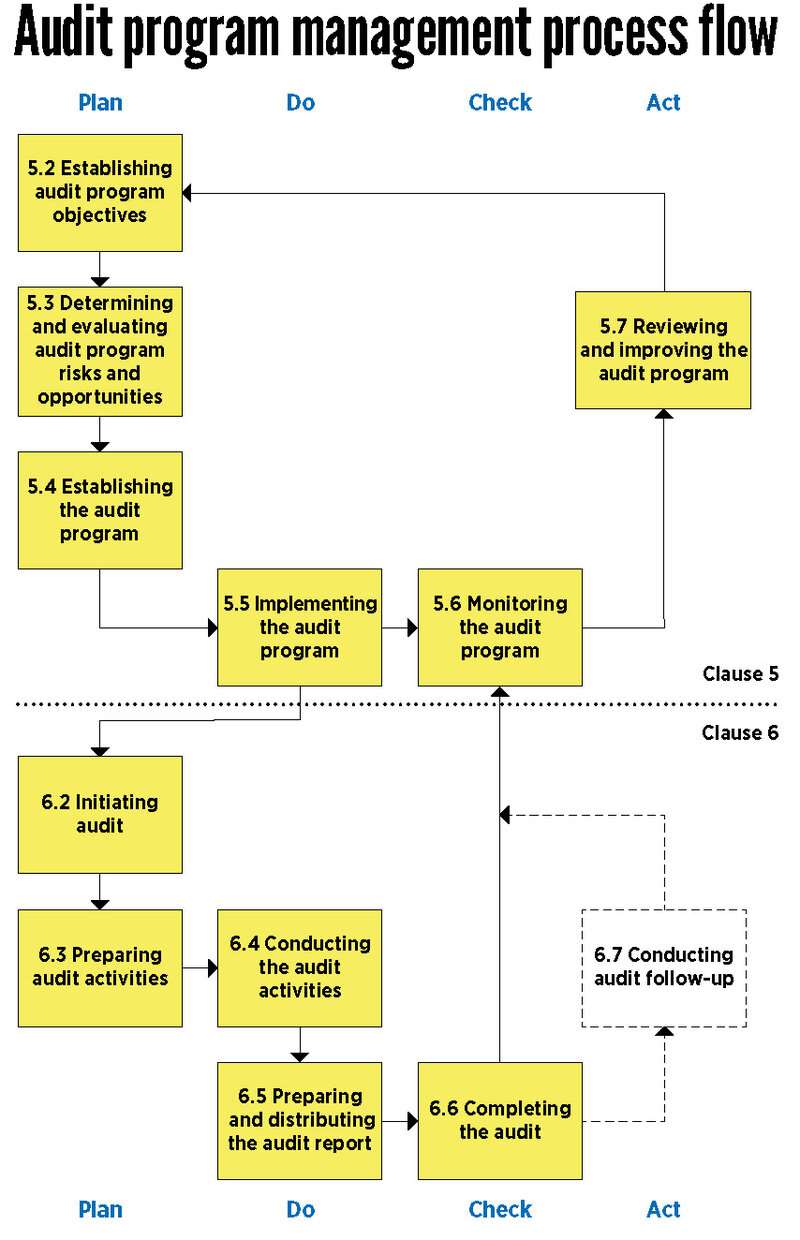
Although ISO 19011—Guidelines for auditing management systems is not an MSS, it has significant relevance for them. Without internal audits, no MSS can be complete. This standard is the pre-eminent authority on auditing. It provides guidance on:
- Managing an audit program.
- Conducting audits.
- Auditor competence.
- Multiple annexes with additional guidance on a variety of auditing topics.
ISO 19011 also is being revised and expected to be published in February 2026.
Related Video
ISO 9004, the ISO 9000 Family and Supporting Resources
Charlie Cianfrani is a member of the U.S. Technical Advisory Group to ISO Technical Committee 176 (TAG 176), and an expert representative for ISO 9004. In this video, he discusses the ISO 9000 family of standards and other supporting documents, including one that helps organizations conduct self-assessments.
Community
myASQ’s online communities provide expanded networking and learning opportunities, including blog posts, discussion threads, and library entries on topics like the fishbone diagram. Members can create new communities to generate new discussions and connections, and anyone can join online communities to reach a broader audience of quality professionals and practitioners – anytime, anywhere.

Certifications
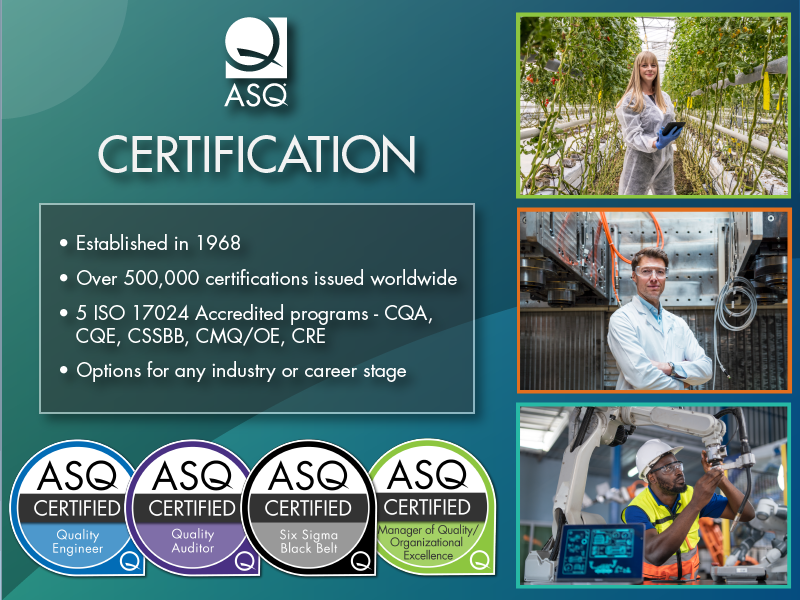
ASQ offers 19 different certifications ranging from foundational quality to advanced quality management, including five ANSI ANAB ISO 17024 accredited programs. Earning an ASQ Certification provides you an opportunity to learn quality tools & concepts and gain a credential that can increase your earning potential and help grow your career.
Learn more about ASQ Certification
View Certification Preparation Resources (Virtual Courses, E-Learning, Question Banks, & Handbooks)
Reviewers
Denise Robitaille is the 2025 recipient of the ASQ Freund-Marquardt Medal. She is the author of 12 books, including ISO 9001:2015 for Small and Medium-Sized Businesses (Quality Press, 2016) and is an internationally recognized speaker and trainer. She is chair of ISO technical committee (TC) 176/subcommittee 1, which is responsible for revising ISO 9000, and chair of Project Committee 302, which is revising ISO 19011. She is an active member of U.S. technical advisory group to ISO/TC 176, an ASQ fellow and a certified quality auditor.
Reviewed September 2025.
References
Pavel Castka and Charles J. Corbett, “No Joking Matter,” Quality Progress, January 2018, pp. 32-37.
Lance B. Coleman Sr., “Standard Issues: Game, Set, Match,” Quality Progress, July 2018 pp. 44-47.
Raunak Gupta, “Quality Through Standards,” Quality Progress, October 2020, pp. 32-38.
Vitaly Ogvozdin, “Bridging the Gap,” Quality Progress, February 2020, pp. 36-45.
Denise Robitaille “Further Along the Path-Checking in on the ISO 9000 revision”, Quality Progress, August 2025, pp. 46-47.
Denise Robitaille, “Standard Issues: Getting Up to Speed,” Quality Progress, November 2024, pp. 46-47.
Isaac Sheps, “Standard Issues: Level Up,” Quality Progress, May 2024, pp. 46-48.
Isaac Sheps, “Standard Issues: Principles of Success,” Quality Progress, May 2025, pp. 44-47.
Elisabeth Thaller and Jorge Bravo, “Standard Issues: Exceeding Expectations,” Quality Progress, August 2023, pp. 44-47.
Lisa Uhrig, Marnie Schmidt, Sheronda Jeffries, and Susan L.K. Briggs, “Standards in Sync,” Quality Progress, September 2025, pp. 14-23.
Reprints & Permissions
ASQ gladly considers requests to use its intellectual property, please see the ASQ reprint permission page for more information. For use of ASQE content or graphics, please contact us at orgmembership@asq.org to request permission.
Join Us on Social
Network with the world’s largest community of quality professionals.


